How to Make Two Homes Feel Like Home
In my last article, I wrote about why you don't necessarily have to choose between New York City and the country. For many people, myself included, having access to both creates a better way to live. But deciding that two homes make sense is only part of it. You also have to figure out how to make the lifestyle actually work.
Two homes can easily mean twice the things to remember, maintain, pack, unpack, and worry about. Over time, I've developed systems that make living between New York City and the Catskills easier. Some involve technology. Some involve buying two of something. Others are as simple as keeping a stocked pantry, taking a photo of my refrigerator contents before I leave, or knowing where to stop for dinner on the drive up.
None of these things is particularly revolutionary, but together they give me something much more valuable: peace of mind. I'm fortunate to be able to have homes in both places, and I've learned that the better I manage the logistics between them, the more I can enjoy what each makes possible.
Remove the Friction
I've learned to pay attention whenever something repeatedly annoys me about moving between the city and the country. If I'm constantly carrying something back and forth, I ask whether I really need to.
We have bicycles in both places. My skis and ski clothing stay upstate near the mountain. My dogs have their own food, bowls and beds there. Gardening tools, pool toys and outdoor games stay there, too. I even keep tick removal kits in three places: the city, the country and the car. If I find a tick, I don't want to have to remember where I left the kit.
I cook frequently, so I've gradually duplicated the kitchen tools I use most. But this isn't about buying two of everything. Much of my favorite clothing still travels between the two homes, and there are inevitably things that come back and forth with us. The system isn't finished. I notice the recurring inconveniences and gradually eliminate the ones I can.
Make Each Home Complete, Not Identical
There are things that make sense in both homes, and others that make sense specifically because they're upstate. I have a charcoal grill, smoker and stand mixer there because I have the space to use and store equipment that would be impractical in my Manhattan apartment. The house also gives me additional storage, so off-season clothing can live there instead of competing for limited closet space in the city.
The same principle applies to food. I keep the pantry stocked, drinks in the house and usually have herbs planted outside for cooking. At the same time, Trader Joe's, Citarella and Fairway are immediately around my Upper West Side apartment, so I often grocery shop before we leave. The selection is better, particularly for meat and fish, and it minimizes the need to drive to Kingston once I'm upstate.
I also love going to the Union Square Greenmarket. There's something I particularly enjoy about buying from upstate farmers in the middle of Manhattan, especially when the market is overflowing with produce in the summer and fall. It's one of those places where my city and country lives overlap.
I keep a cooler for the groceries that make sense to bring from the city. I've also gotten into the habit of photographing the contents of the refrigerator before we leave the Catskills. When I'm shopping several days later and can't remember what we already have upstate, I look at the photo. It's incredibly simple, but it prevents me from unnecessarily buying the same groceries twice.
Technology works the same way. I use Cync for smart lighting in both homes, Sonos for music in both, and the same streaming services. One of my favorite little things is buried in the settings of the Cync app. There's a button that says "Switch Between Homes." I press it and the app switches between my Manhattan apartment and my Catskills house. I love pressing that button. There's something about moving between the two homes with one tap that feels incredibly luxe to me.
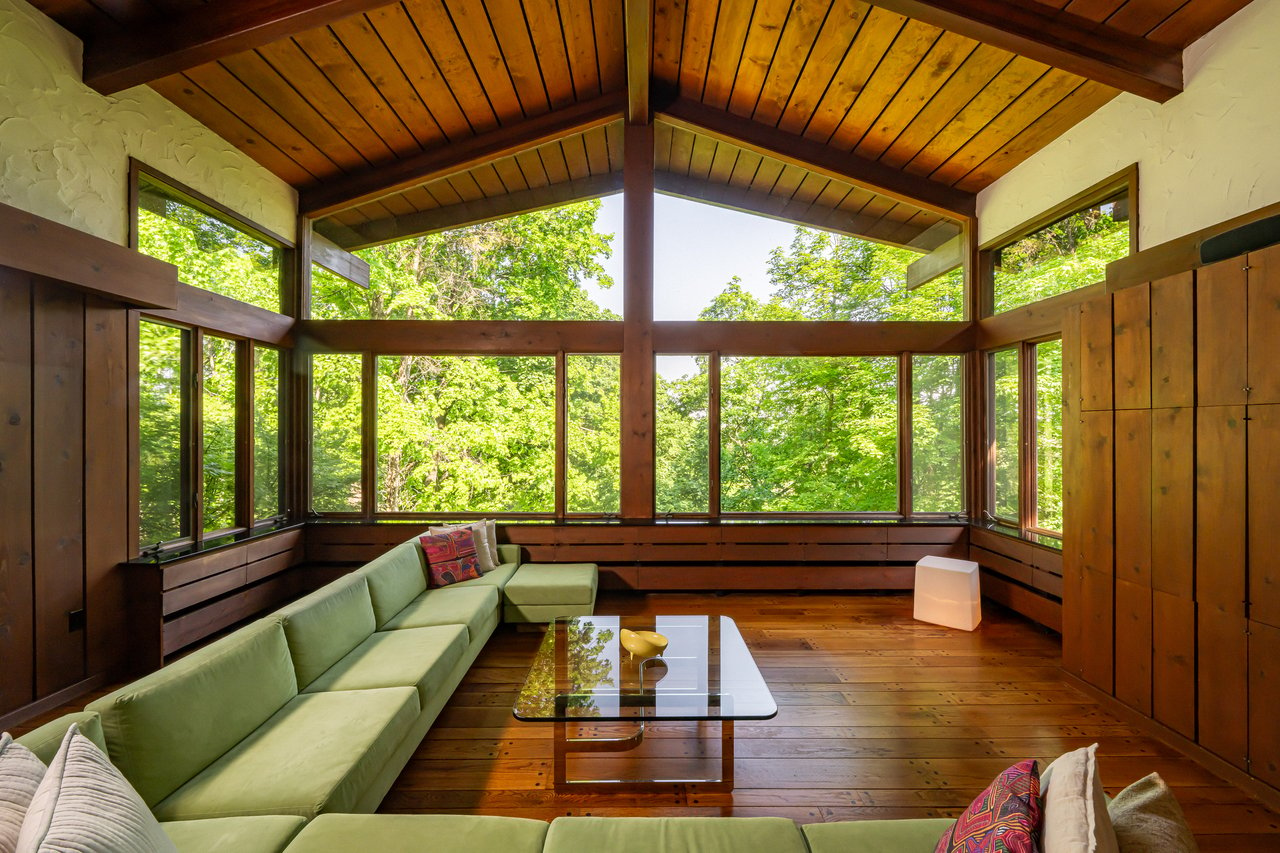
The smart thermostats have probably made the biggest practical difference. Before I installed them, we could arrive upstate in the middle of winter to a house that was around 50 degrees. We have hydronic baseboard heat in a contemporary house with very high ceilings, so getting the house back up to temperature could take until the following morning.
Now I turn up the heat remotely before we leave the city. By the time we arrive, the house is warm. It's a relatively small change that completely changed the experience of arriving in winter.
Learn the Space Between
When you make the same trip often enough, you develop systems around the drive, too. I know where I like to buy gas based on price and convenience, where to wash the car, and who I trust for tires when I suddenly need one repaired or replaced. I use a New York E-ZPass so I'm not paying a premium on tolls.
I know the farm stands I like along the way and where we can stop for dinner if we're leaving the city after work. I even know where I can reliably stop to use a bathroom, including gas stations and the porta-potties at the Ashokan Rail Trail depending on which route I'm taking. None of this sounds particularly important until you're regularly making the trip with a child and dogs in the car.
After making the drive enough times, you figure out what works. The route becomes familiar, and the distance between the two homes feels more manageable.
Build a Life at Both Ends
Removing friction only matters because it leaves more time for the things we actually want to do. Skiing is probably at the top of my list. I have cycling routes I love. I look forward to cooking outside, seeing our neighbors and sitting by the pool.
I also really look forward to coffee in the morning. I have a great espresso machine upstate that I love using, and I buy freshly roasted beans from Blue Bottle Coffee in the city and bring them with me. It's a small ritual I associate with waking up at the house and having a slower morning.
Our relationships upstate have become important, too. We have neighbors we genuinely enjoy spending time with, and some of those friendships aren't confined to the Catskills. We see each other in the city as well.
My son has developed his own relationship with the house. His blocks and a collection of stuffed animals stay there, along with what he calls his "potions" kit, where he can play chemist outside on the deck and make as much of a mess as he wants.
We also try to live a little more analog when we're upstate. Board games, cards, outdoor games and simpler activities are a bigger part of life there. Screens still exist, of course, but we spend more time outside, swim, ski, cook and generally slow things down. We keep his swimming things and pool toys there, along with a pool tote already packed with a towel, sunblock, sunglasses and bug spray.
This is an important part of why the lifestyle works for us as a family. We want him to become an excellent skier from an early age and grow up comfortable in the mountains and outdoors. At the same time, we don't necessarily want to adopt a traditional parent lifestyle where every weekend revolves around driving from one organized children's activity to another. Having the Catskills as part of our normal family life gives us another way to spend that time together.
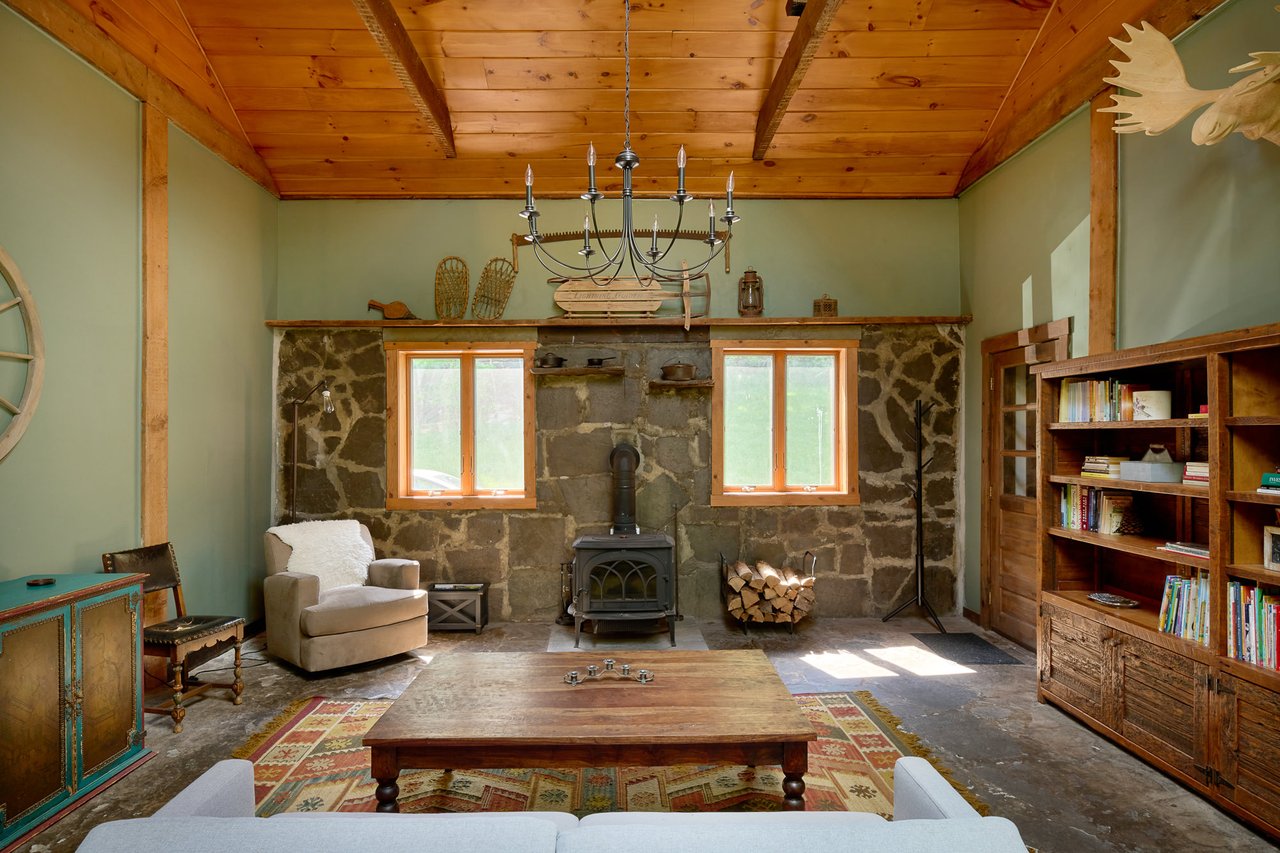
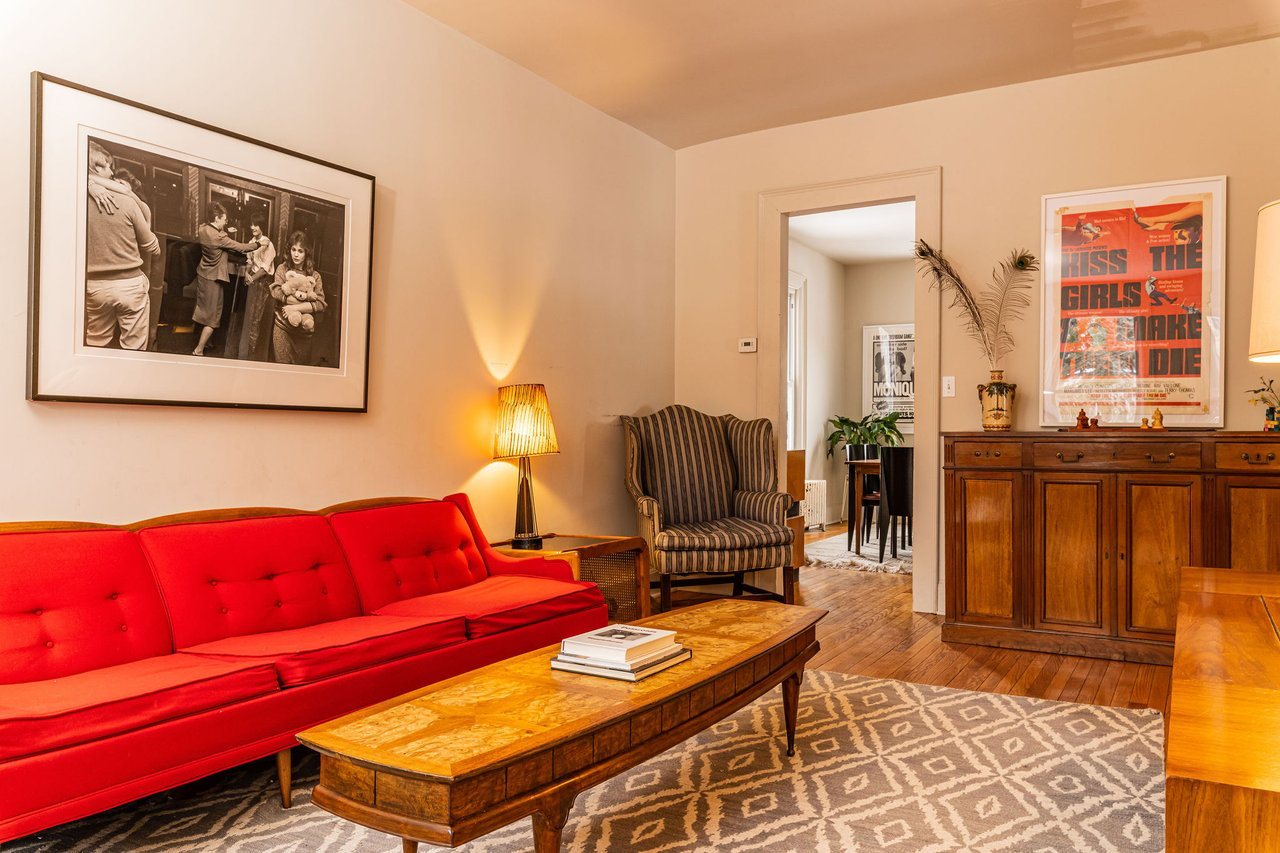
Our two homes also reflect the different ways we live in each place. Our Manhattan home feels like the city, while our country house is designed around a different relationship with the outdoors and with each other. I think that's an important part of making two homes work, and something I'll explore separately.
When we're heading back to Manhattan, I look forward to completely different things. I can leave the car behind and walk almost everywhere. I have public transportation and easy access to restaurants, culture, friends and everything else that makes living in New York City so compelling. I don't want one place to replace the other. That's the point.
Have a System for Leaving
One of the most stressful parts of leaving upstate used to happen after we were already in the car. I'd find myself driving back toward the city wondering whether we had locked a particular door. Did I unplug the coffee machine? Were the oven and stove definitely off? Did we close all the windows? Nothing had necessarily gone wrong, but not being able to remember would gnaw at me.
So we created a detailed departure checklist, and we use it every time we leave. It changes with the seasons because closing up the house in January isn't the same as leaving it in July. It covers security, doors and windows, lights, thermostats, water, appliances, garbage, outdoor furniture and dozens of other small things we've learned we need to check.
We also assign responsibility for many of the tasks. Instead of both of us assuming the other person probably handled something, we know who is responsible for it. That's particularly helpful when we're simultaneously trying to close a house, load the car, manage the dogs and get a child out the door.
The checklist has changed how I feel once we've left. If something is still bothering me, I can verify it remotely. I have cameras positioned inside the house, and I can monitor the security system, thermostats and lighting. I've even used the cameras after a power outage to see whether lights unexpectedly came back on. I trust the checklist, but I like having the ability to verify it. It allows me to stop thinking about the house once I've left.
Buying Myself Peace of Mind
I've also learned that not everything needs to be done by me. I have garbage collected rather than spending part of my time upstate driving it to a transfer station. I coordinate with the gardener so the lawn can be mowed before we arrive. There's a difference between work around a country house that I enjoy and work that simply consumes time I'd rather spend doing something else.
That's really how I've come to think about this entire system. Every time something creates unnecessary friction, I pay attention to it. Can I duplicate it? Automate it? Leave it where I use it? Put it on the checklist? Hire someone to handle it? Or simply anticipate it so I'm not reacting to the same problem again next weekend?
None of these things is particularly important on its own. A pair of slippers doesn't change your life. Neither does a photograph of your refrigerator contents. Knowing where the bathroom is on the drive up isn't profound. A smart thermostat is still just a thermostat. Collectively, though, these small decisions have changed the experience of living between two places.
There are still things I want to improve, and I'm sure there always will be. I'm not trying to engineer every inconvenience out of my life simply for the sake of efficiency. I'm buying myself peace of mind. The more predictable things I can anticipate, the less time I spend reacting to them. The less mental energy I spend wondering what I forgot, what needs to be done, or what might be happening at the other house, the more present I can be wherever I am.
That's ultimately what all of these systems are for. The goal isn't to make two homes identical. It's to make each one complete enough that you can arrive and live. When you get that right, moving between the city and the country stops feeling quite so much like going away. Both places simply feel like home.