The New Luxury: A House That Works When Nothing Else Does
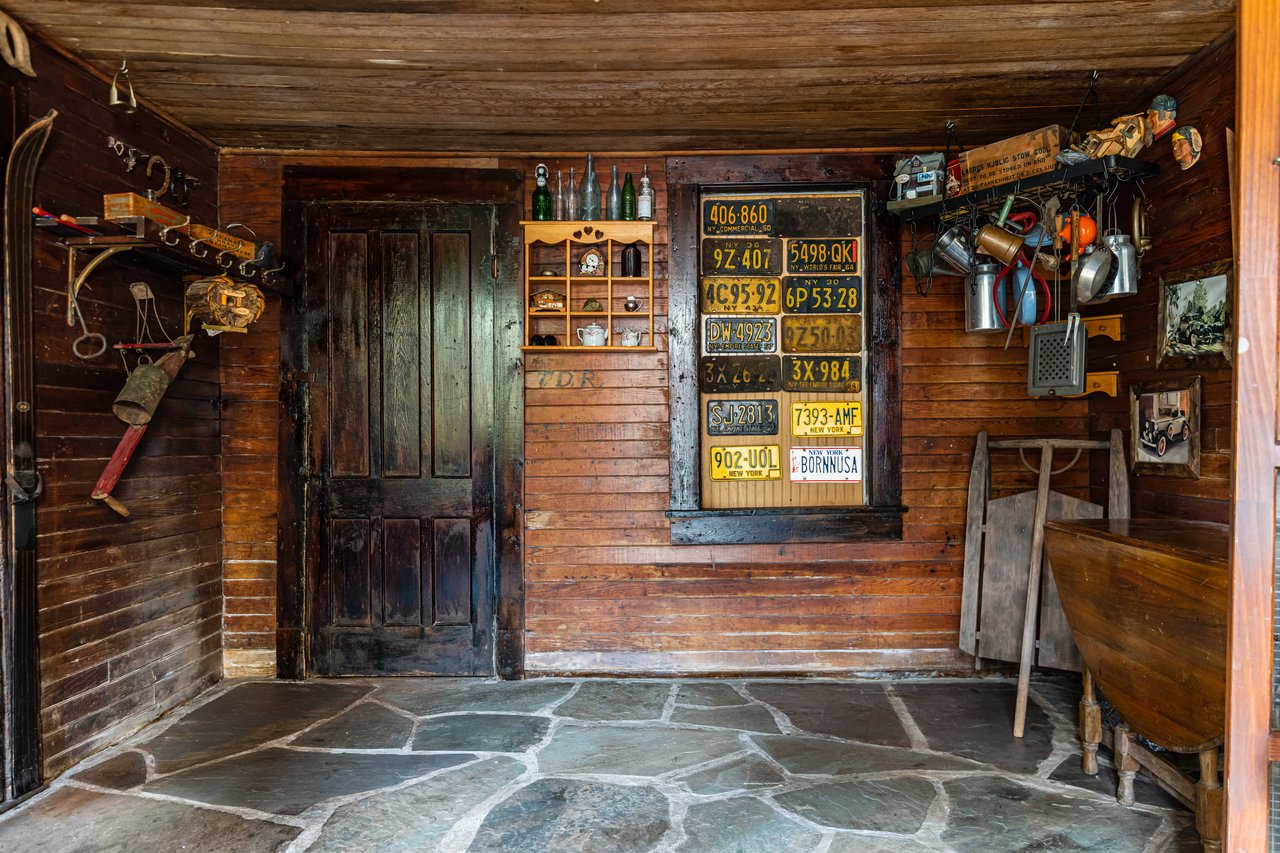
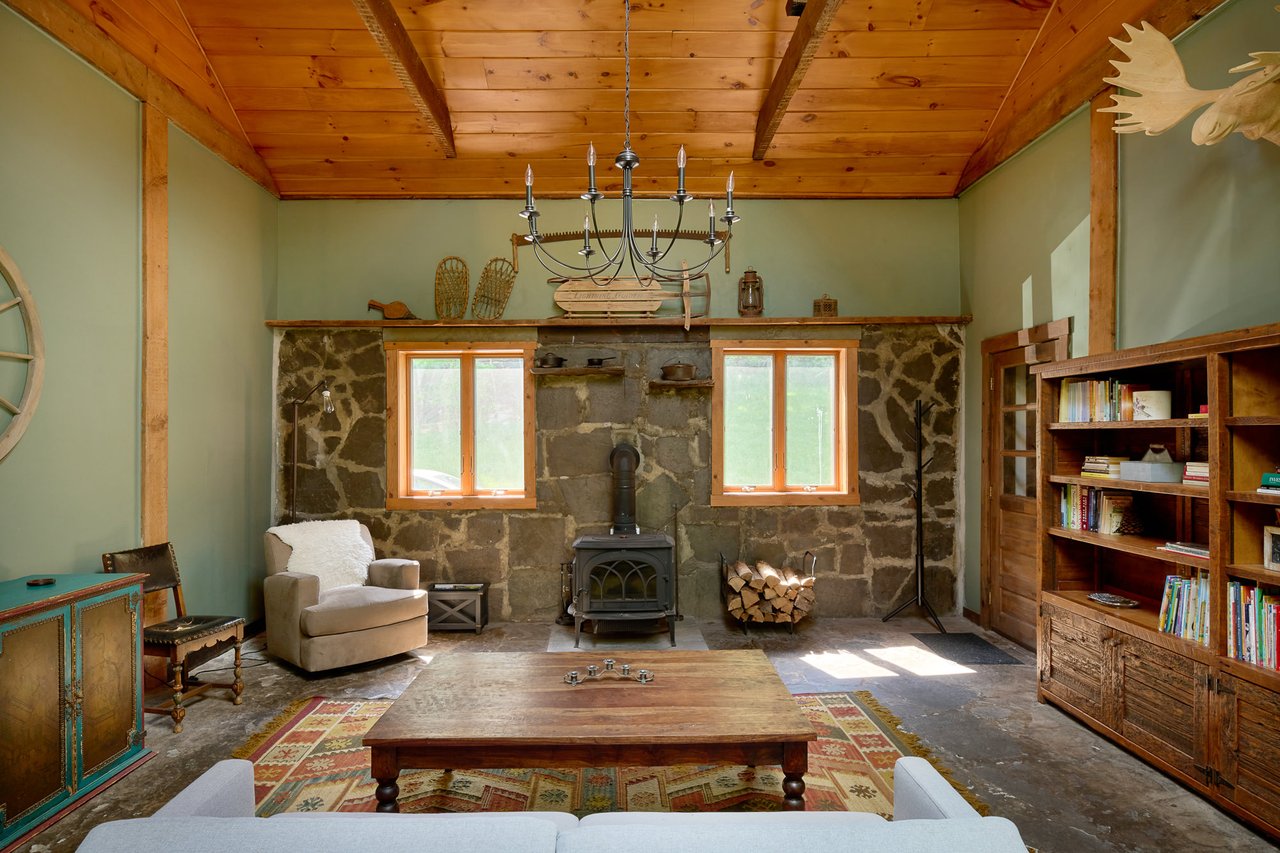
Imagine spending $10 million on an absolutely spectacular country house. Now imagine the power goes out. The internet stops working. Your smart-home system refuses to cooperate, and you can’t get in touch with anyone to help. Meanwhile, the guy down the road with a 150-year-old farmhouse, a wood stove, and a barn full of tools and lanterns is doing just fine.
Who’s living in luxury now?
I’ve been thinking about this lately, partly because of the increasingly strange world we’re living in and partly because the questions people ask about country properties are evolving. Most buyers still want the usual things: privacy, beautiful views, proximity to nature, good restaurants and somewhere to spend weekends away from New York City. But there’s another category of buyer thinking beyond the weekend.
What happens if there’s an extended power outage? A major cyberattack? A disruption to transportation, communications or essential services? What if the AI systems we’ve enthusiastically integrated into nearly every aspect of modern life decide we’re no longer necessary?
I’m not predicting a robot uprising. And I don’t think everyone needs to start digging a bunker. But if you have the resources to own a second home, there’s a reasonable argument for choosing one that offers something more than recreation. A place where your family could live comfortably and independently for an extended period, should the need ever arise. As it turns out, the qualities that make a property useful in a crisis are often quite different from those that make it impressive on Instagram.
First, You Have to Get Out of Manhattan
There’s a fundamental problem with buying an escape property: you have to be able to escape to it. Manhattan is an island. Leaving requires bridges, tunnels and highways that are already congested on perfectly ordinary Friday afternoons. It’s tempting to imagine a remote compound in northern Vermont, the Adirondacks or Maine. Hundreds of acres, mountain views, a mile-long driveway and no neighbors. That sounds wonderful until you consider how you’re getting there when everyone else has the same idea. For this exercise, I think proximity matters enormously. A country property within a few hours of New York City offers a practical advantage over something substantially farther away. You can visit regularly, keep it stocked, maintain its systems and become familiar with the surrounding community.
The Catskills and Hudson Valley are obvious candidates, but the distinction between different parts of these regions matters. There are multiple corridors leading north and west from the metropolitan area, including routes through the Hudson Valley, along the New York State Thruway and into the western Catskills. Some properties can be approached from different directions, while others depend on a single mountain road or bridge. I’d want to understand those options before buying.
Of course, having alternative routes doesn’t guarantee you’ll be able to use them in a genuine emergency. And if roads are already compromised, staying safely in place may be preferable to attempting a journey. The smarter approach is to own a property that’s already part of your life, rather than somewhere you intend to visit for the first time when things go wrong.
The Case for the Western and Northern Catskills
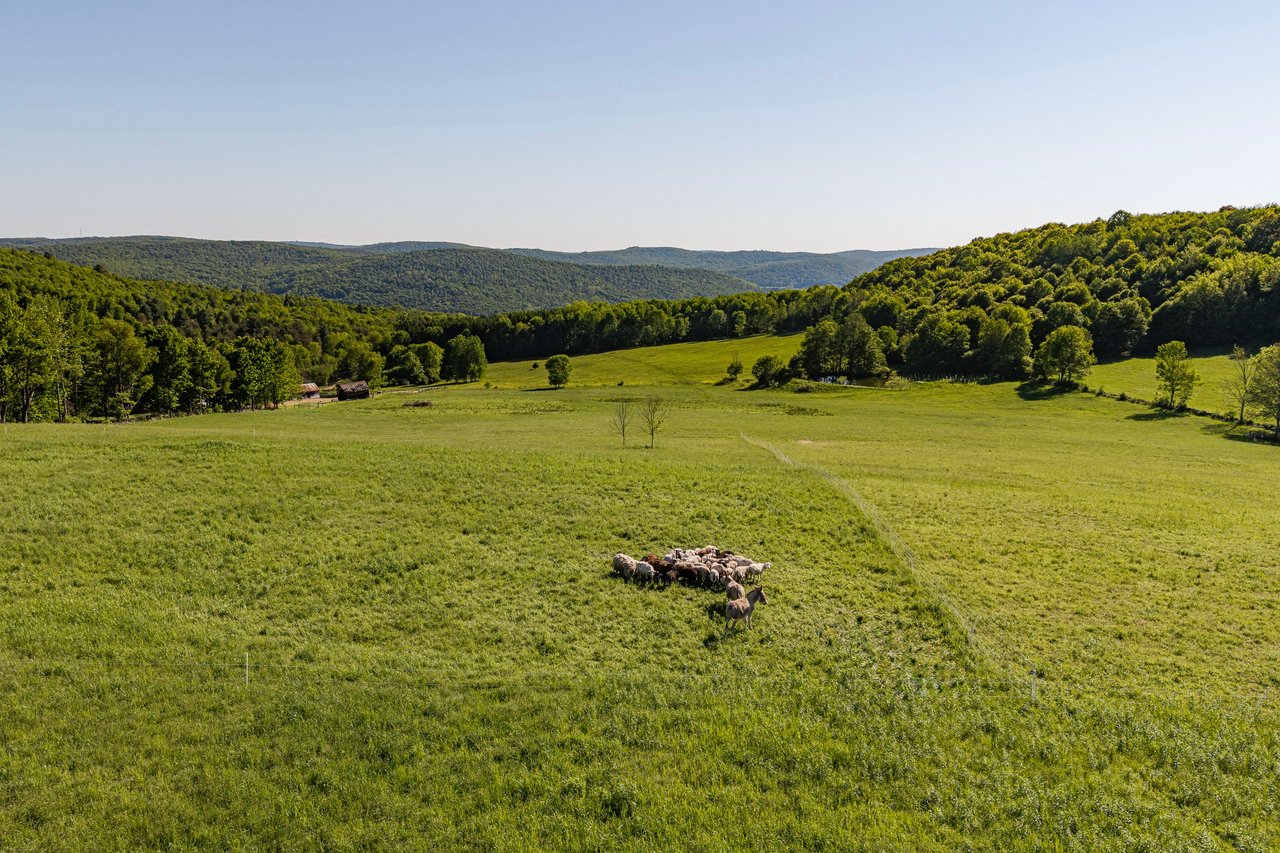
If I were searching for a property that combined accessibility, privacy, productive land and a functioning rural community, I’d spend considerable time in Delaware and Schoharie counties. These areas don’t necessarily have the same name recognition among luxury buyers as Woodstock, Rhinebeck or parts of Columbia County. That’s part of what makes them interesting. There are still working farms, open fields, substantial acreage and communities whose economies extend well beyond weekend tourism.
Around Roxbury, Margaretville and Grand Gorge, you’ll find a combination of mountain landscapes, agricultural land and access to established villages and recreation. Farther north and west, Harpersfield, Kortright, Jefferson and Stamford offer another collection of rural landscapes worth exploring, particularly for buyers interested in open acreage and agricultural surroundings. Delhi and Meredith deserve consideration as well, especially for someone who values proximity to a larger year-round service center. Andes, Bovina, Delhi and Meredith remain among the most beautiful agricultural landscapes in the western Catskills, and they deserve consideration as well.
I wouldn’t declare any one of these towns the winner. The right 20-acre parcel in one town could be dramatically more suitable than a 100-acre property just a few miles away. What matters is the combination of topography, access, water, privacy, usable land and proximity to people who know how to live and work in a rural environment. The town name is just the beginning of the search.
Higher Ground, But Not Necessarily the Highest Ground
For a property intended to serve as a long-term refuge, I’d pay particularly close attention to elevation, drainage and exposure to flooding. Much of the Catskills’ beauty comes from its valleys and waterways. But proximity to a river or creek can introduce risks that aren’t always obvious during a sunny afternoon showing. Floodplains, historic storm damage, vulnerable access roads and downstream exposure to dams or reservoirs all deserve investigation. The FEMA Flood Map Service Center and New York State’s DECinfo Locator are useful starting points, although neither replaces property-specific investigation.
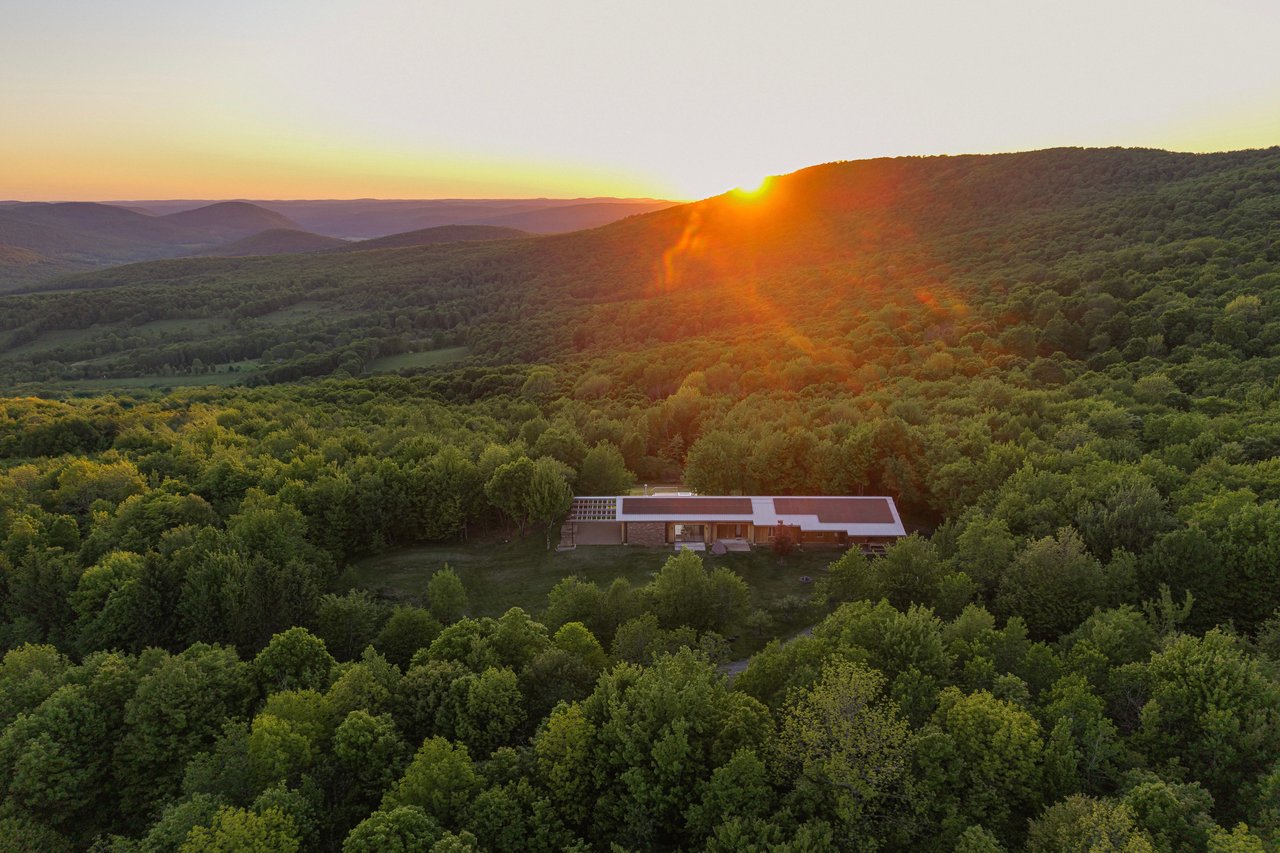
That doesn’t mean every elevated property is automatically a good choice. A house perched on a steep, north-facing mountainside may be well above the nearest creek but have limited sunlight, difficult winter access and virtually no usable land. What I’d look for is something more balanced: an elevated, well-drained homesite with good solar exposure, a manageable driveway, open acreage and practical access to public roads. A beautiful view would be nice, too. After all, the world might not end, and you’ll still want somewhere pleasant to drink your morning coffee.
Ten Good Acres May Be Better Than a Hundred Bad Ones
Acreage is one of the most misunderstood aspects of rural real estate. Buyers often assume that more land automatically means greater privacy, flexibility and value. It doesn’t. I’ve seen properties with substantial acreage where much of the land is steep, wooded, wet or otherwise difficult to use. That might be perfectly fine if your goal is hiking, hunting or simply owning a large piece of forest. But if you’re interested in a degree of self-sufficiency, the composition of the land becomes much more important.
A well situated property with 15 or 20 acres of usable land might accommodate a substantial garden, greenhouse, orchard, workshop and additional structures. A 75-acre property consisting almost entirely of steep forest might offer none of those possibilities without significant expense. I’d want to understand soil quality, drainage, sun exposure, existing agricultural uses and the actual amount of workable acreage. The USDA Web Soil Survey is a useful starting point for understanding soil classifications and potential agricultural suitability.
And while we’re talking about land, I’d place real value on an existing barn. Not necessarily the beautifully restored event barn with chandeliers and a catering kitchen. An actual working barn. Somewhere to store equipment, maintain machinery, keep supplies and work on things. It may not photograph as well, but it could prove considerably more useful.
Water Is the New Wine Cellar
If I were ranking the most important features of a resilient country property, a dependable water supply would be near the top. Not the kitchen. Not the primary bathroom. Not even the view. Water. Many rural properties in the Catskills rely on private wells, while some use springs. Either can provide a degree of independence, but the existence of a water source doesn’t necessarily tell you enough.
I’d want to understand its yield, water quality, condition and year-round reliability. I’d also want to understand how the water reaches the house during an extended power outage. All of this can be understood during an inspection. A private water supply is only useful if you can actually access it, and untreated water isn’t necessarily safe to drink.
Septic systems deserve similar attention. Properly functioning private wastewater infrastructure can reduce dependence on municipal systems, but its condition and capacity matter. These are the kinds of details that rarely inspire buyers to fall in love with a property. They should probably inspire a little more attention than they currently receive.
Your House Should Be Able to Function Without the Internet
I like technology. I appreciate the convenience of smart thermostats, automated lighting, remote monitoring and sophisticated home systems. But there’s a difference between technology that makes a house easier to live in and technology that makes it impossible to operate without outside support. If your heating system requires an internet connection, what happens when connectivity fails? If the electricity goes out for several days, can you still heat the house, pump water, refrigerate food and operate essential equipment? If a component fails, can somebody locally repair it?
A resilient property should have systems that are relatively straightforward to understand, maintain and operate. For a buyer with substantial resources, there’s an opportunity to invest in multiple layers of backup infrastructure. Solar generation, battery storage, generators, sufficient fuel reserves and alternative heating sources can all contribute to greater independence. The details need to be engineered carefully. A solar installation without appropriate battery storage and islanding capability, for example, may not keep a house running during a grid outage. I’d also want a well-insulated building envelope. Reducing the energy required to keep a house comfortable is just as important as finding additional ways to produce that energy.
Reliable communications deserve attention, too. Satellite internet can provide an additional option, but terrain, tree cover and equipment power requirements matter. I’d investigate conventional broadband and cellular coverage as well, rather than assuming any one connection will always be available. The New York State Broadband Map is a useful starting point, although actual service availability should be confirmed at the property.
And perhaps most importantly, I’d want a house that doesn’t require a small army of specialists every time something goes wrong. The objective isn’t to reject modern conveniences. It’s to make sure they remain conveniences rather than necessities.
Privacy Is Valuable. Isolation Is Overrated.
I think the traditional survival-compound fantasy gets something fundamentally wrong. The assumption is that the farther you are from other people, the safer and more independent you become. But there’s a point at which isolation starts creating more problems than it solves. What happens when something breaks? When a tree blocks the driveway? When somebody gets injured? When the generator needs a part you don’t have?
You can own 200 acres and still be remarkably dependent on the outside world. One of the most appealing qualities of Delaware and Schoharie counties is the presence of established agricultural communities. There are farmers, contractors, equipment operators, mechanics and tradespeople who understand the practical realities of maintaining property in a challenging climate. Those relationships matter.
I’d rather own a private property surrounded by a functioning year-round community than a spectacular compound so remote that every minor problem becomes an expedition. For most buyers, I’d look for meaningful privacy while remaining within a reasonable drive of groceries, medical services, hardware stores and other necessities. And I’d make an effort to become part of the community long before I needed anything from it. Being the mysterious person behind the locked gate who appears only when civilization collapses probably isn’t the best introduction to your neighbors.
Money Can Buy Infrastructure. It Can’t Buy Geography.
This is perhaps the most important distinction in the entire exercise. A buyer with substantial resources can improve almost anything about a country house. You can install solar panels and battery systems. Add a generator. Build a greenhouse. Renovate the kitchen. Improve insulation. Construct additional accommodations for family, guests or caretakers, where permitted. You can create a very sophisticated property that operates with considerably less dependence on outside infrastructure.
But there are things that money cannot easily change. You cannot move the house out of a floodplain. You cannot turn a steep mountainside into productive pasture without major intervention. You cannot guarantee a stronger aquifer. You cannot change the fundamental location of the property or eliminate every vulnerability along the road leading to it. This is why I’d prioritize the characteristics that are hardest to change. Location. Land. Water. Topography. Access. Privacy. Everything else is secondary.
For the right buyer, I’d much rather find an unremarkable house on an exceptional parcel than an exceptional house on fundamentally compromised land. You can build a better house. It’s much harder to build a better hill.
A Refuge Should Accommodate More Than Just You
There’s another practical consideration that often gets overlooked. If you’re imagining a country property as somewhere your family could spend an extended period, who exactly is coming? Children? Parents? Siblings? Friends? Perhaps someone who helps maintain the property? A three-bedroom weekend house might feel perfectly adequate for ordinary use but become crowded very quickly if multiple generations are living together. This is where a guesthouse, separate cottage or flexible secondary accommodation becomes particularly valuable.
I’d also want substantial pantry space, room for additional refrigeration and freezers, practical laundry facilities, storage for supplies and somewhere to work or make repairs. These aren’t necessarily the features that dominate luxury property listings. But they’re the kinds of things that make a house function comfortably over an extended period. And there’s no reason they can’t coexist with beautiful architecture, comfortable furnishings, a swimming pool and a very good kitchen. Preparedness doesn’t have to mean deprivation.
The Escape House You Never Maintain Won’t Save You
There’s one final consideration that may be even more important than the equipment you install. Someone needs to keep everything working. It’s easy to imagine outfitting a property with a sophisticated solar array, backup generator, water filtration system and enough supplies to survive a particularly unpleasant winter. But generators need testing. Fuel needs to be managed. Batteries require monitoring. Wells, pumps and heating systems need maintenance. Driveways need plowing, trees fall and roofs occasionally leak. None of these things waits politely until your next visit.
For someone who lives primarily in New York City, I’d want a reliable local caretaker or property manager who understands the house and its systems. I’d also want clear operating instructions, scheduled maintenance and a realistic understanding of how the property functions when the owners aren’t there. A house that can theoretically operate independently for several weeks isn’t particularly useful if you arrive to discover that the backup generator hasn’t started in two years. The most resilient property isn’t necessarily the one with the most equipment. It’s the one whose systems are understood, maintained and regularly used.
The Best Escape Property Is One You Actually Want to Use
I don’t know whether artificial intelligence will eventually develop ambitions beyond helping us write emails and generate amusing photographs. But I do think the broader idea of resilience deserves more consideration in the way people buy second homes. For someone with the resources, a country property can offer something beyond recreation or investment. It can provide flexibility, independence and a greater degree of control over the environment in which their family lives.
That doesn’t mean total self-sufficiency. Even the best-equipped rural property remains dependent on people, supplies and systems beyond its boundaries. But reducing some of those dependencies has value. And the most sensible version of this strategy isn’t buying a remote bunker that sits empty waiting for a catastrophe. It’s buying a beautiful, functional country property that you genuinely enjoy.
Somewhere you spend weekends, invite friends, grow a garden, ski in the winter and develop relationships with the surrounding community. A house that happens to have excellent infrastructure, dependable water, useful land and the capacity to accommodate your family for an extended period. Because if the robots never take over, you’ve still got a wonderful country house. And if they do, at least you’ll have somewhere to go. Preferably with a decent wine cellar.