Where You Buy Upstate Matters More Than You Think
Most buyers begin their upstate search with what they know. Hudson. Woodstock. Rhinebeck. New Paltz. Beacon. Cold Spring. Hunter. Windham. Maybe they've spent a weekend at a hotel or Airbnb in Hudson. They've been to a wedding in the Hudson Valley, skied at Hunter or Windham, or visited Woodstock over the years. Increasingly, their familiarity also comes from what they've seen on Instagram. There's nothing wrong with starting there. The problem is assuming that familiarity tells you where you should buy. The Catskills and Hudson Valley cover an enormous and remarkably varied region. Drive an hour in almost any direction and the landscape, density, restaurants, services and overall experience can change considerably.
I've found that most buyers are much better at describing the house they want than the life they want to live there. They'll tell me they want a farmhouse with five acres. Or a contemporary house with lots of glass. A barn. A pool. Mountain views. A stream. Privacy, but not too much privacy. Some want to be surrounded by woods; others specifically don't. And then there are what I call my "light, bright and airy" buyers. Ask whether they want all three and the answer is almost invariably an enthusiastic yes. The house is relatively easy to describe. The lifestyle is harder.
Start With the Life, Not the Town
Early in a search, I'll usually hear that someone wants to be within 20 or 30 minutes of restaurants, groceries, or shops. But what that means in practice varies considerably from one buyer to the next. Do you need ten restaurants to choose from, or two that you love? Do you want to cook most weekends? How important is a good grocery store? Will guests be coming from the city without a car? How frequently are you actually going to ski? And perhaps most importantly: what do you want to do when you wake up on Saturday morning?
I've had buyers become less concerned about restaurants and retail after experiencing a landscape that completely captivated them. I've also seen the opposite. One buyer was considering selling a home in a more populated part of the region and made an offer on a property farther afield. Then they went into the local Tops supermarket. They withdrew the offer. It sounds ridiculous until you think about actually living somewhere. A spectacular view doesn't buy groceries. If you're living upstate full time, the things you need on a random Wednesday in February may matter just as much as what you imagined doing on a beautiful October weekend.
The Right House for Whom?
I once worked with buyers who moved from Arizona to the Catskills full time. They chose a house largely because they loved its design and the value it offered. After about a year, they realized the location was simply too rural for the way they wanted to live. They sold it and moved to a more densely populated community with easier access to everyday amenities. The people who bought their house wanted almost exactly the opposite. They were keeping their home in New York City and wanted a place to retreat, spend time in nature and eventually enjoy their retirement. They added a pool, made the property their own, and embraced the qualities that hadn't worked for the previous owners. Same house. Same location. Two completely different experiences. That's why I don't believe there is a "best" town in the Catskills or Hudson Valley. There is only a place that works particularly well for the life you want to have.
Draw a Circle Around Your Life
I often tell buyers to stop thinking exclusively in terms of individual towns and start thinking regionally. Draw a circle around a prospective house and imagine that most of your everyday upstate life will happen within it.
My own circle centers around Roxbury and regularly includes Margaretville, Fleischmanns, Andes, Bovina and Shandaken. I grocery shop in Margaretville, ski at Belleayre, hike at Kelly Hollow and Palmer Hill, and cycle around the Pepacton Reservoir. That doesn't mean I stay inside that circle. I'll drive to Woodstock for a special dinner, Hudson for restaurants or shopping, or Kingston when I need big-box stores. When I lived upstate full time, I even drove to Livingston Manor for a $15 haircut from a barber who had owned his shop since before the 1969 Woodstock festival. I liked him, but I also loved the drive and having a reason to experience another part of the region.
You're going to drive upstate. The more important question is what you want close by every day and what you're willing to travel for occasionally.
Thirty Minutes Isn't Always Thirty Minutes
Drive time from New York City matters. A country house that's too difficult to reach won't get used as much as you imagined. But not all drive time feels the same. Often the worst part of the trip is simply getting out of New York, especially from Brooklyn or Queens on a Friday evening. An additional 30 minutes driving past mountains, farms and reservoirs isn't the same as 30 minutes sitting in city traffic. Your schedule matters, too. Someone who can leave the city on Tuesday afternoon has a very different relationship with distance than someone fighting Friday evening traffic every weekend. Rather than deciding that two hours is acceptable and two and a half isn't, think about how you'll actually use the house.
Sometimes the Landscape Changes the Search
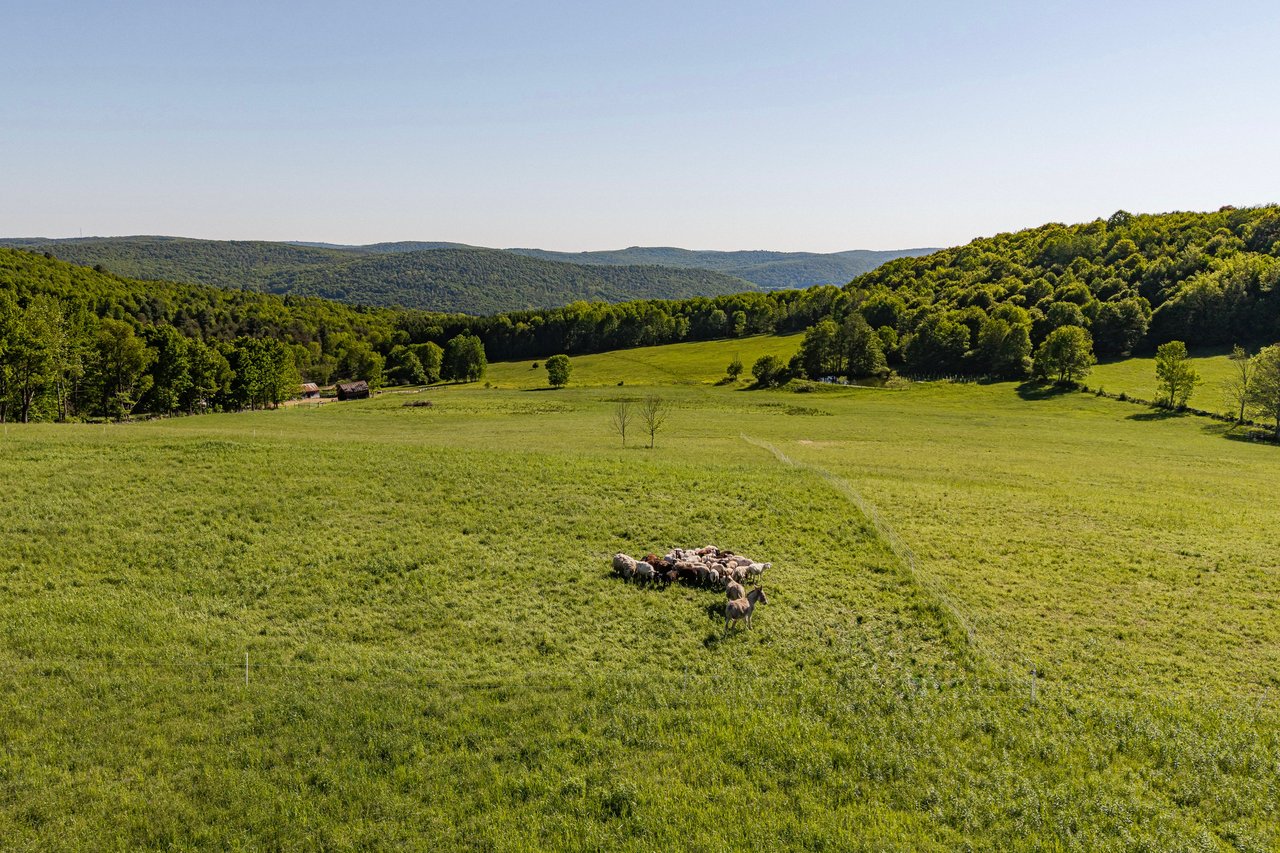
This is why I encourage buyers to explore beyond the places they already know. Some of the region's most extraordinary landscapes are farther afield. The Slide Mountain Wilderness around Big Indian is spectacular. Giant Ledge offers one of the most rewarding hikes in the Catskills. The Pepacton Reservoir can feel remarkably peaceful compared with more heavily visited parts of the region. Delaware County opens into dramatic mountain views, rolling farmland, valleys and pastures that many buyers don't realize exist until they experience them. For some buyers, seeing those places changes the equation. Suddenly being five minutes from a coffee shop matters less. They realize that the restaurant isn't the point of the country house. The country house is the point.
But Don't Romanticize It
That doesn't mean everyone should buy 20 acres at the end of a dirt road. Some people genuinely want convenience. Some don't want to cook when they come upstate. Some need good healthcare nearby. Some expect guests arriving by train. And someone who skis constantly should think very differently about proximity to a mountain than someone who skis twice a year. I've also worked with buyers who explored seemingly every corner of the region without getting any closer to deciding what they wanted. After showing one set of buyers properties across what felt like half of upstate New York, I eventually told them I couldn't keep driving seven counties with them. They needed to narrow their search before we continued.
Exploration is important. Endless indecision isn't.
Get to Know the Region
The biggest mistake I see New York City buyers make isn't choosing the wrong town. It's making that choice before they've sufficiently explored the region. Spend time here. Take different routes. Visit in different seasons. Go somewhere you've never heard of. Visit the grocery store. Drive to the ski mountain. Hike the nearby trail. See what the trip from the city feels like when you'd actually make it. Most importantly, pay attention to what you enjoy rather than what you thought you were supposed to want. After you've owned a country house for a few years, the calculus changes anyway.
For me, the contrast from my everyday life matters much more than filling a weekend with things to do. I can open the windows and hear owls, crickets and birds. I can open the door and let the dogs outside instead of taking an elevator to the lobby and walking them on a leash. I can ride my bike on quiet roads. I can ski. I can cook in a spacious kitchen. And I can spend an entire day at home without feeling like I should be somewhere else. There aren't a thousand and one things competing for my attention. That's what I wanted from being upstate. It took time to understand that. Someone else may want a village, restaurants, neighbors and a train station nearby. Someone else may want 50 acres and no visible neighbors. For some people, a little fresh air is enough. Others want complete immersion in nature.
There are a lot of ways to get upstate right. The important thing is spending enough time here to figure out which one is yours.
How to Make Two Homes Feel Like Home
If you want to read more about integrating your city + country lifestyle, check out my article How To Make Two Homes Feel Like Home.