What It’s Really Like to Own a Farm in Upstate New York
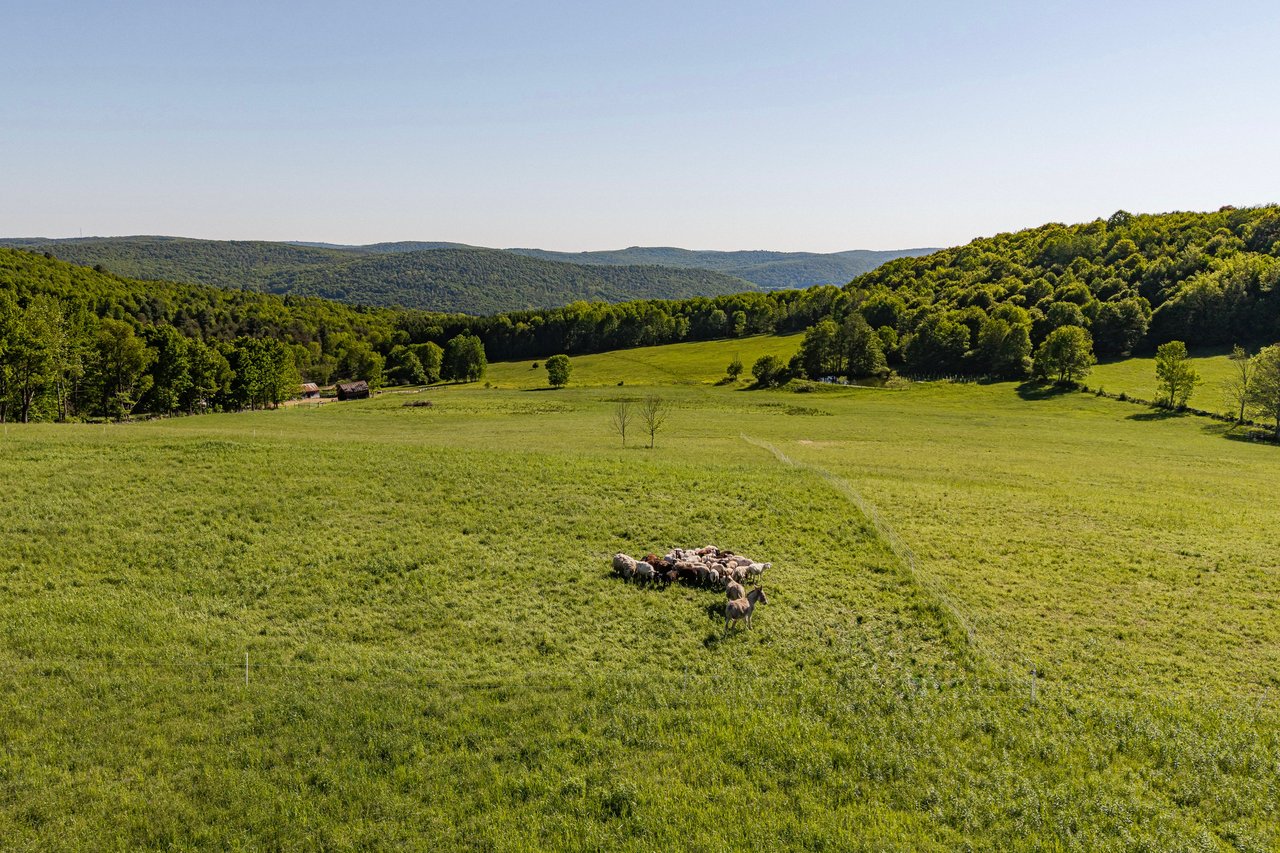
There is something almost universally appealing about an old farmhouse surrounded by open fields. Add a barn, a pond, some animals grazing in the distance and a mountain view, and you have a pretty convincing version of the upstate New York fantasy.
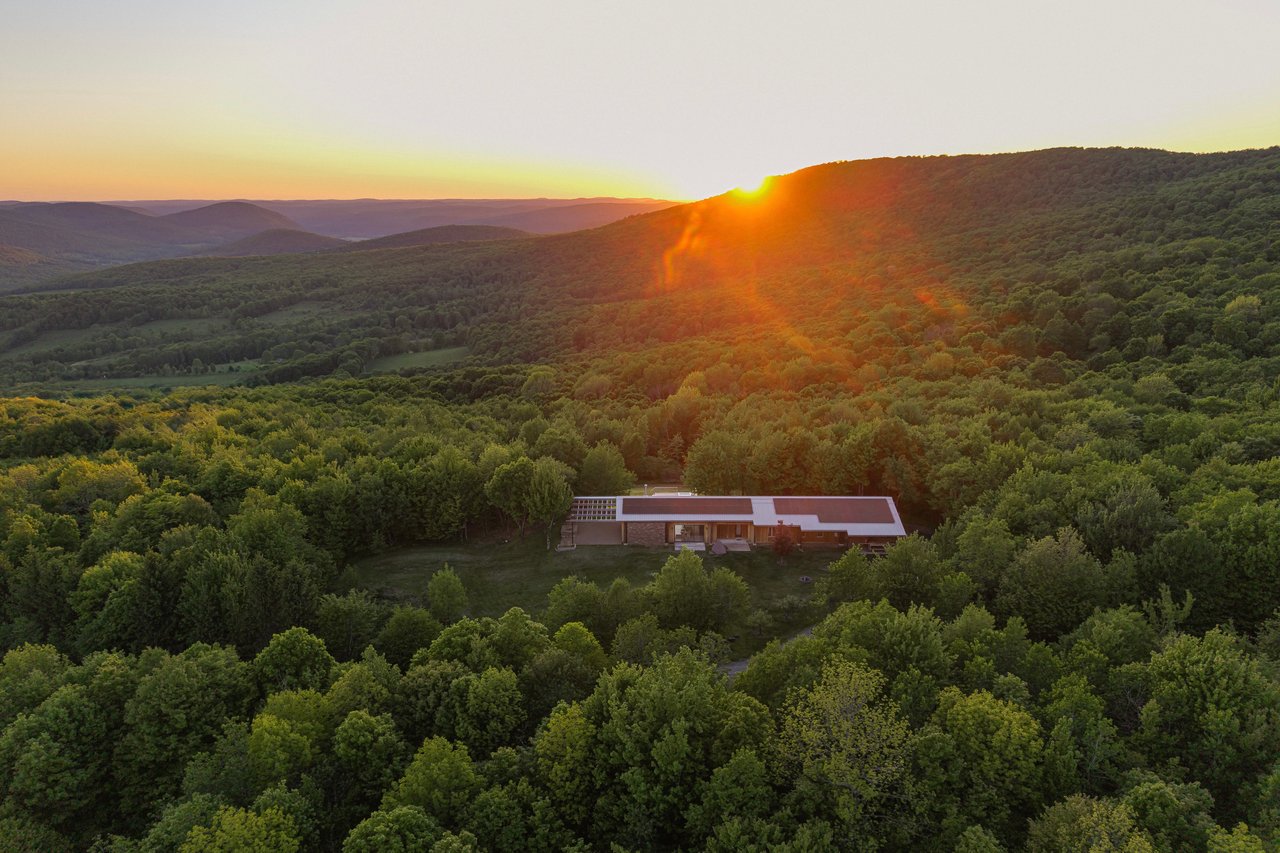
In Delaware County, New York, that landscape is still very real. Drive the back roads around Franklin, Andes, Bovina, Delhi or Roxbury and you'll pass farms tucked into valleys, old barns sitting beneath the mountains, hay fields rolling down hillsides and pastures that have been worked for generations. It's part of what makes this corner of the Catskills so beautiful.
For some buyers, owning a piece of that landscape becomes the dream. The reality is more complicated. Not necessarily worse. In many ways, I think it's better. But buying a farm is different from buying a house with a large yard, and understanding that difference can make the experience considerably more rewarding.
Owning a Farm Doesn't Mean You Have to Become a Farmer
This is probably the biggest misconception. You can love the idea of owning a farm without having any desire to wake up at 5 a.m. to feed sheep. Many of the properties we casually call farms haven't operated as commercial farms in years. Others are still actively producing food, hay, livestock or timber. And plenty fall somewhere in between.
What matters is that agricultural land gives you options. You might keep animals yourself. You might allow a neighboring farmer to hay or graze your fields. You could maintain the property primarily as open meadow. Portions might eventually return to woodland. A barn might continue serving an agricultural purpose or become a workshop, studio or simply very useful storage.
The View Requires Maintenance
One of the things buyers sometimes underestimate is that the landscape they are buying isn't static. Those beautiful open fields exist because someone has been maintaining them. Stop mowing, grazing or haying a pasture and nature begins taking it back. Grasses grow taller. Brush moves in. Saplings follow. Eventually, in much of upstate New York, open land wants to become forest again.
That isn't necessarily a bad thing. Some owners intentionally allow portions of their land to rewild. Others want to preserve every acre of open pasture. But it's a decision. If what attracted you to a property was the long view across an open field toward the mountains, maintaining that field becomes part of taking care of the property.
The good news is that you don't necessarily have to do it yourself. In agricultural areas like Delaware County, relationships with neighboring farmers can be enormously valuable. Depending on the property and the quality of the land, someone may hay a field or use it for grazing.
Suddenly, the maintenance of your view becomes connected to the agricultural community around you.
Barns Are Wonderful. Barns Are Also Buildings.
I love old barns. So do most of my buyers. They are one of the defining features of the upstate landscape and offer possibilities that are difficult to replicate in a conventional residential property. They can hold equipment, cars, bicycles, skis, workshops, animals or an extraordinary amount of accumulated stuff. They can also become studios, entertaining spaces or something entirely unexpected.
But a barn is still a building. Roofs eventually need attention. Foundations move. Wood deteriorates. Drainage matters. An old barn that has been standing for 150 years can look indestructible right up until you start examining it closely.
The same principle applies to other agricultural infrastructure. Fencing, sheds, drainage, farm roads and ponds all become part of the property you're responsible for. This doesn't make them liabilities. It just means acreage and outbuildings deserve the same scrutiny you would give the house.
You Will Assemble a Rural Rolodex
Owning property in the country tends to introduce you to an entirely new group of people. You'll learn who plows reliably, who understands old houses and barns, who can repair a well pump on a Sunday and who actually calls you back. Depending on the property, you may eventually know farmers, arborists, septic contractors, electricians, equipment mechanics, chimney sweeps and people who own machinery you didn't previously know existed.
For people arriving from New York City, this can initially feel unfamiliar. Eventually, it becomes part of living here. And on a larger property, these relationships matter even more. You don't need to know how to do everything yourself. You just need to know who does.
Animals Change the Equation
There is an enormous difference between wanting sheep in your Instagram photos and wanting sheep. Animals introduce an entirely different level of responsibility. They need food, water, shelter, fencing and care whether you're in the mood to provide it or not. For someone looking for a weekend house, that distinction is particularly important.
That doesn't mean animals are unrealistic. Quite the opposite. For the right person, keeping horses, sheep, chickens or other livestock can become one of the most rewarding parts of owning land. But owning a farm doesn't obligate you to fill it with animals.
You are allowed to own a barn without putting anything in it but bicycles and an unreasonable amount of stuff.
The House Is Only Part of What You're Buying
This may be the biggest difference between evaluating a conventional house and evaluating a farm. With a house, the boundaries of the decision are relatively obvious. You inspect the structure, understand the systems, consider the neighborhood and decide whether the property works for you.
With a farm, you're also buying a landscape.
You're buying the fields outside the kitchen window. The barn across the driveway. The hill behind the house. The trees along the road. The places where water collects. The view you'll see in February when everything is white and again in June when the grass is waist high.
And you become, at least temporarily, responsible for what happens to all of it. That responsibility is part of what makes owning a farm different.
Why Delaware County
There are beautiful rural properties throughout the Hudson Valley and Catskills, but Delaware County has a particularly close relationship with agriculture. The landscape feels different here. The valleys are broader. The mountains and hills frame enormous stretches of pasture. Farms aren't simply remnants incorporated into residential developments. Agriculture remains visible in everyday life.
That authenticity is a big part of the appeal. It's also why I encourage buyers looking for substantial acreage to spend some time here rather than limiting their search to the better-known towns closer to the Hudson River. You can find the old farmhouse. You can find the barn. You can find the pasture and the mountain view. And sometimes you can find all of them together.
The Romance Isn't Wrong
There is a tendency when talking about rural property to correct the fantasy. Yes, you'll need someone to mow the fields. The barn roof will eventually need work. The driveway will need plowing. Something involving water will almost certainly become more challenging than you ever expected. But none of that means the romantic version is false.
You really can wake up and look across your own pasture toward the mountains. You can walk out the door instead of getting into a car to find nature. You can grow food, keep animals, work in a barn or simply sit on the porch and watch someone else hay your field.
The difference is that you're not merely looking at the landscape anymore. You're responsible for a small piece of it. For the right person, that's not the downside of owning a farm in upstate New York. It's the whole point.